Skip to content
Turntable Learning
Get in touch

Our programme

What actually happens in a session.

Every young person picks one of three pathways and works towards something finished. The structure below is the same whichever they choose — it's the material that changes, not the rigour.

Three pathways

Children choose a path. And make it theirs.

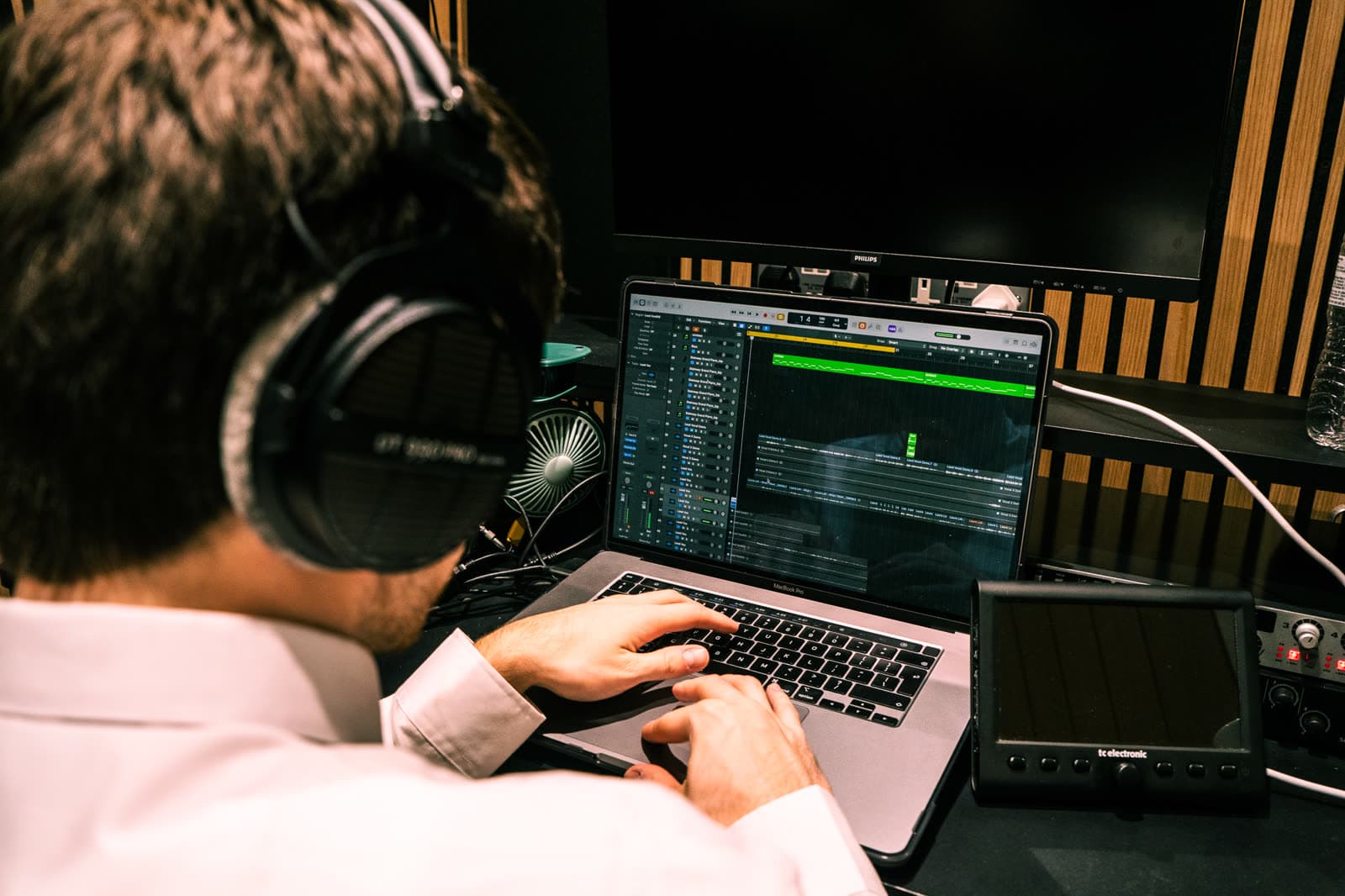
A producer arranging a session in a DAW, shot over the shoulder

Music Production

Writing, recording, mixing and finishing a track of their own.

  • Recording and arranging in a professional DAW
  • Beat-making, sampling and sound selection
  • Mixing, vocal tracking and finishing a release

They leave with: A finished, mixed track they wrote and recorded themselves.

A film crew on set, seen past a laptop running the session

Video Production & Photography

Filming, lighting, editing and telling a story on camera.

  • Camera operation, framing and lighting a scene
  • Directing, storyboarding and planning a shoot
  • Editing, colour and delivering a finished cut

They leave with: A finished film or a set of photographs they shot and edited.

A young person mixing on the decks while others watch

DJing

Beatmatching, mixing and building a set worth playing out.

  • Beatmatching, phrasing and mixing between tracks
  • Reading a room and building a set that moves
  • Recording and releasing a mix of their own

They leave with: A recorded mix they built and can share.

Every session

Learn. Create. Develop. Review.

A two-hour session runs in four blocks. The last one matters most: the young person's own reflection shapes what the next session looks like.

  1. 01

    Learn

    0–30 min

    Structured teaching on the skill of the week, led by a working professional.

  2. 02

    Create

    30–60 min

    Hands-on practice on the studio equipment, with support alongside.

  3. 03

    Develop

    60–90 min

    Personal project work — their own track, film or mix, moving forward.

  4. 04

    Review

    90–120 min

    Reflection together. The child's voice shapes what the next session covers.

Every session, and every workshop day, ends with something real the young person made themselves.

Two formats

A first step, and the full programme.

Flagship

The 10-week programme

Two-hour weekly sessions, ages 11–18, delivered 1:1 or in a small group. A young person picks a pathway in week one and finishes with a completed piece of work.

Weeks 1–4
Core skills — the fundamentals of the chosen pathway
Weeks 5–7
Applying skills — working on their own material
Weeks 8–10
Project completion — finishing and releasing the work
  • 2-hour weekly sessions
  • Ages 11–18
  • 1:1 or small group

Taster

3-day Creative Pathways Workshop

A lower-commitment way in for a group of five: one pathway per day across three days, so a young person can try all three before committing to anything. Often the first touchpoint before a referral into the full programme.

Day 1
Music Production
Day 2
Video Production & Photography
Day 3
DJing
  • 4.5 hours per day
  • Groups of 5
  • One pathway per day

How we think about it

Child first, always.

Our model is built on the Youth Justice Board's Child First framework. In plain terms, that means four things and none of them are specific to the justice system.

  • A child first

    We see a young person, and what they're interested in, before anything else about their situation.

  • Building identity

    The work is about what they can do and make, not what they've struggled with.

  • Collaborating with them

    They choose the pathway, and their reflection shapes each following session.

  • No stigma attached

    It's a working studio with professional staff. It doesn't feel like a service being delivered to them.

What they leave with

Six things, every time.

  • A finished creative project

    A track, a video, or a recorded DJ mix — completed, not started.

  • A basic portfolio

    Something real to show a future employer, college or support worker.

  • Industry-relevant technical skills

    On the actual equipment professionals use, not theory on a worksheet.

  • Improved confidence

    From completing something difficult and being able to say “I made this.”

  • Communication and teamwork

    Built by working alongside professionals in a studio environment.

  • A sense of what's out there

    Awareness of real creative career pathways in a sector worth £116bn to the UK economy.